Intraday Movement Deep Analysis: Investment Logic Behind Market Volatility in August 2026
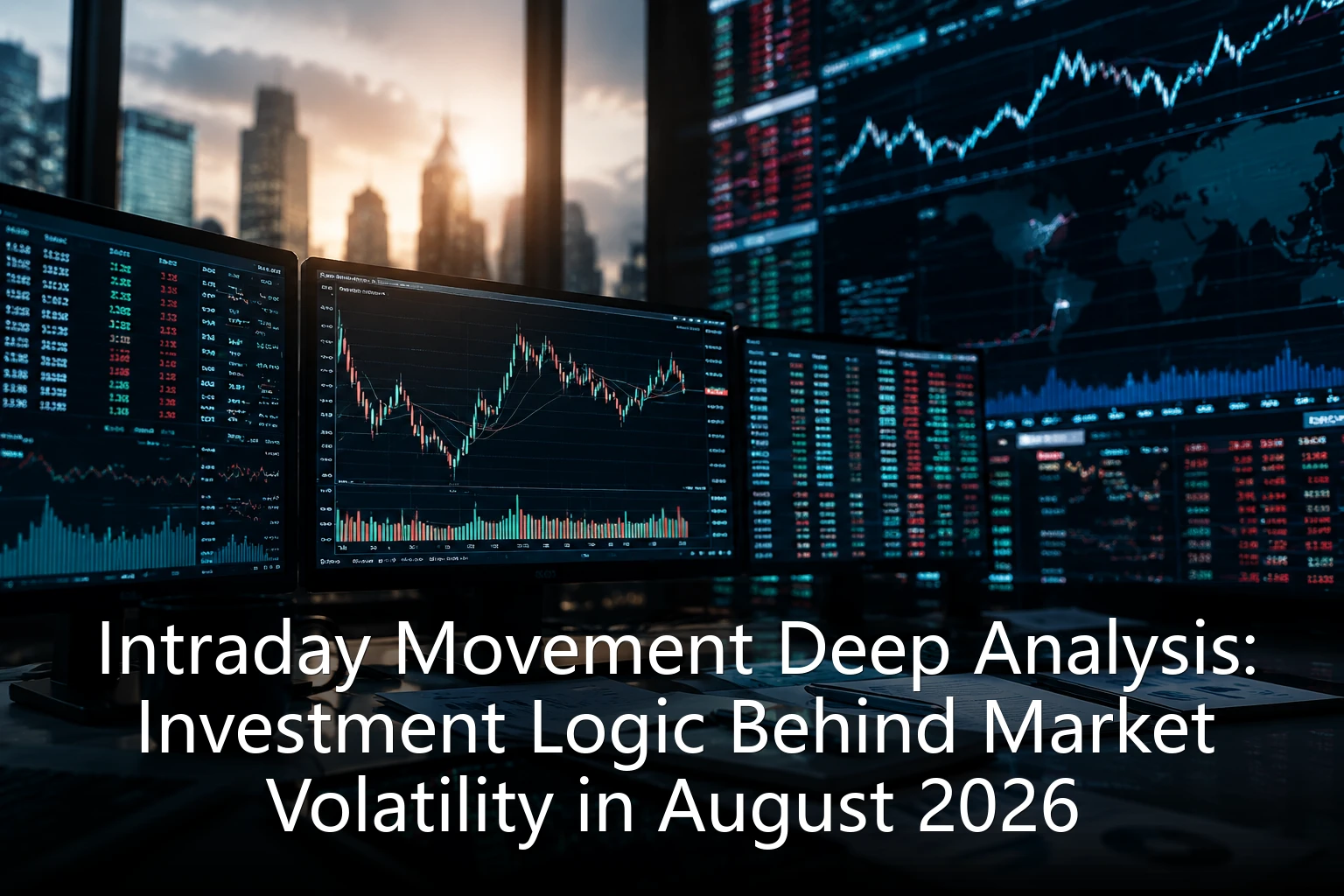
\nIn the financial markets of August 2026, intraday movements in US stocks have become increasingly frequent and severe, becoming a key factor affecting investment decisions. This article will delve into the market structure changes, shifts in investor behavior patterns, and effective response strategies behind these fluctuations, helping readers seize investment opportunities amid volatility.
\n\nMarket Background: A Volatile August
\nEntering August 2026, the US stock market has shown a clear trend of increasing volatility. According to Wall Street data, the daily average volatility of the S&P 500 index has increased by 23% compared to the first half of the year, with the Nasdaq index experiencing even greater volatility at 28%. This increased volatility is not only reflected at the index level but also in the sharp price movements of individual stocks.
\nExpert analysis suggests that this increased volatility stems mainly from three factors: first, the uncertainty of the Federal Reserve's monetary policy, although the market widely expects a possible rate cut in September, there are still disagreements on the specific magnitude and timing; second, the continued geopolitical tensions, especially conflicts in the Middle East exacerbating energy price fluctuations; third, the valuation adjustments of AI-related stocks, leading to increased internal fragmentation in the technology sector.
\n\nTypical Characteristics and Case Studies of Intraday Movements
\nObserving recent US stock intraday movements, several obvious features can be identified: first, the concentration of movement times, with most severe fluctuations occurring within 30 minutes after market opening and one hour before closing; second, the expansion of movement scale, with the number of individual stocks fluctuating more than 5% in a single day increasing by 40% compared to the same period last year; third, the strengthening of transmission effects, where individual stock movements easily trigger chain reactions in related sectors.
\nFor example, on August 5, the US stock market exhibited a typical intraday movement pattern. Around 10:30 AM, without significant news, the Nasdaq Technology Index suddenly dropped sharply by 1.8%, then quickly rebounded by 11:00 AM. Behind this movement was actually a chain reaction triggered by algorithmic trading from large institutions. According to market news, the quantitative trading system of a hedge fund automatically triggered large sell orders after detecting specific technical indicator signals, causing a "domino effect" in algorithmic trading.
\nAnother typical case occurred in the energy sector on August 8. At 11:00 AM that day, without obvious news stimulus, Western Digital's stock price surged 7% within 15 minutes. Subsequently, the market disclosed that this movement was caused by the early leak of a research report from a large investment bank, which upgraded Western Digital's rating from "Hold" to "Strong Buy," triggering follow-up buying in the market.
\n\nMarket Structure Interpretation of Intraday Movements
\nChanges in the structure of the US stock market are the deep-seated reasons for the frequent intraday movements. First, high-frequency trading now accounts for nearly 60% of market trading volume. These algorithmic trading systems typically have trigger conditions that automatically execute trades when specific conditions are met, amplifying market volatility.
\nSecond, the structure of market participants has changed. The proportion of institutional investors continues to rise, while individual investors are increasing their participation in the market through ETFs and zero-commission trading platforms. This structural change makes the market's reaction to information more sensitive and homogeneous, easily forming a "herd effect."
\nThird, the development of the derivatives market also affects the volatility of the spot market. The correlation between options and futures trading and the spot market has increased, with price changes in the derivatives market quickly transmitted to the spot market, exacerbating intraday volatility.
\n\nInvestment Strategy Responses to Intraday Movements
\nFacing increasingly frequent intraday movements, investors need to adjust traditional trading strategies and establish more flexible response mechanisms. Here are several effective strategies:
\n\n1. Technical Indicator Optimization
\nTraditional technical analysis tools need to be optimized for high-volatility markets. Investors are advised to focus on multi-timeframe analysis while combining volume indicators and volatility indicators. For example, when a stock price breaks through a key technical level, if trading volume increases simultaneously and volatility indicators show abnormalities, the credibility of this breakthrough is higher.
\nIn addition, parameters for momentum indicators such as the Relative Strength Index (RSI) and Stochastic Oscillator need to be adjusted according to market volatility. In high-volatility markets, traditional parameters may be too sensitive, and it is recommended to appropriately extend the calculation period to reduce false signals.
\n\n2. Capital Management Adjustments
\nIn increasingly volatile markets, capital management strategies are crucial. The following methods are recommended:
\n- \n
- Reduce single-trade risk: Limit the amount of each trade to within 2%-3% of total capital \n
- Set dynamic stop-loss: Adjust stop-loss levels based on market volatility to avoid being washed out during sharp fluctuations \n
- Position building in batches: For favored positions, adopt a batch-building strategy to avoid investing too much capital at once \n
- Cash management: Maintain an appropriate proportion of cash positions to reserve flexibility for opportunities during market volatility \n
3. Sector Rotation Capture
\nIntraday movements are often accompanied by sector rotation, and investors need to pay attention to the relative strength of different sectors. It is recommended to establish a sector rotation monitoring system focusing on the following indicators:
\n- \n
- Price differences between leading and lagging stocks within a sector \n
- Capital flows of sector ETFs \n
- Relative performance of different sectors in the futures market \n
- Industry news and policy changes \n
Risk Management: Protecting Assets in Volatility
\nThe increased uncertainty from intraday movements makes risk management particularly important. Here are several key risk control measures:
\n\n1. Volatility Hedging
\nFor investors holding large stock positions, consider using VIX futures or volatility-related ETFs for partial hedging. When expecting increased market volatility, appropriately increasing allocations to volatility-related tools can hedge against volatility risks in spot assets.
\n\n2. Options Strategies
\nOptions are effective tools for managing intraday volatility. Investors can consider the following strategies:
\n- \n
- Protective puts: Purchase put options for spot positions to set downside protection \n
- Covered calls: Sell call options while holding stocks to increase returns \n
- Straddle strategy: Simultaneously buy call and put options when expecting sharp volatility \n
3. Liquidity Risk Control
\nIntraday movements are often accompanied by liquidity changes, especially small-cap stocks may experience liquidity dry-ups during volatility. Recommendations include:
\n- \n
- Avoid large transactions during peak volatility periods \n
- Prioritize liquid instruments \n
- Set slippage tolerance to avoid overly aggressive trade execution \n
Future Outlook: Long-term Trends in Intraday Movements
\nLooking ahead, US stock intraday movements may show the following trends:
\n\n1. Expanding Impact of Algorithmic Trading
\nAs artificial intelligence and machine learning technologies deepen their application in the financial sector, the impact of algorithmic trading on the market will further expand. This may lead to increased frequency and amplitude of market volatility, while also making market reactions more rapid and sensitive.
\n\n2. Regulatory Environment Changes
\nIn the face of increasingly frequent intraday movements, regulatory agencies may introduce stricter regulations, especially targeting high-frequency trading and algorithmic trading. This may lead to changes in market structure, affecting patterns of intraday volatility.
\n\n3. Increasing Investor Education Needs
\nAs market complexity increases, investors' demand for professional knowledge and tools will grow. In the future, investor education will become particularly important, helping investors better understand and respond to intraday movements.
\n\nConclusion: Finding Opportunities in Volatility
\nUS stock intraday movements are both challenges and opportunities. For investors, the key lies in understanding the market structure and logic behind the volatility, establishing trading systems and risk management frameworks adapted to high-volatility environments. Through technical analysis optimization, capital management adjustments, sector rotation capture, and effective risk control, investors can find investment opportunities in volatility and achieve long-term stable investment returns.
\nIn the current complex and changing market environment, Huaxin Insight Financial Research will continue to monitor the development trends of US stock intraday movements, providing professional and timely analysis and recommendations to help investors grasp market dynamics amid volatility and achieve wealth growth.