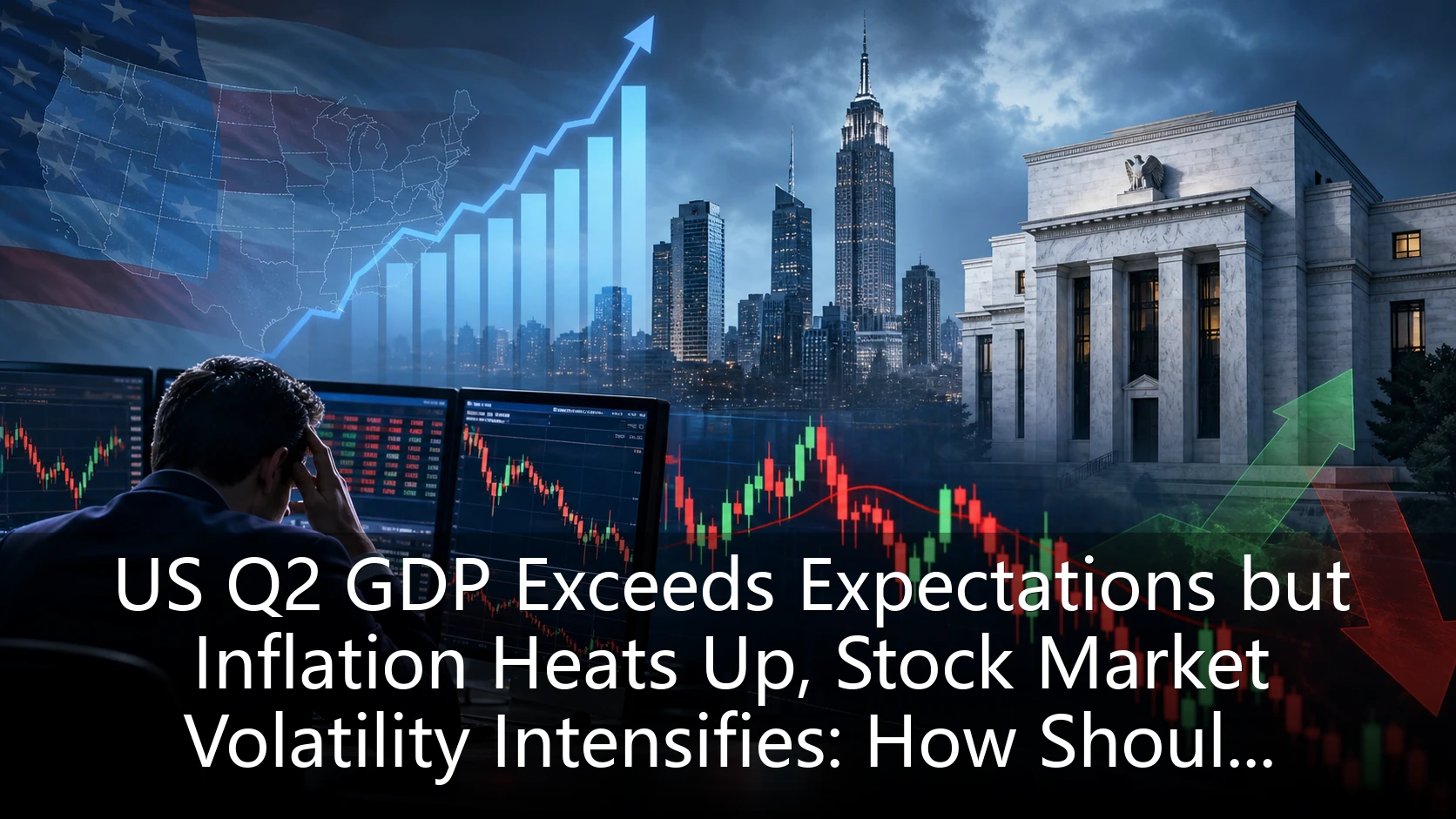
On July 28, 2026, the U.S. Department of Commerce released the preliminary second-quarter Gross Domestic Product (GDP) data, showing an annualized quarterly growth rate of 2.8%, not only beating the market expectation of 2.5% but also accelerating significantly from the first quarter's 1.9%. However, the core Personal Consumption Expenditures (PCE) price index, a key inflation gauge, rose to 3.5%, higher than the expected 3.3%, indicating that price pressures have not subsided. After the release of this "mixed" data, the three major U.S. stock indexes opened higher but closed lower: the Dow Jones Industrial Average edged up 0.1%, the S&P 500 fell 0.3%, and the Nasdaq Composite expanded its decline to 0.8%, with tech stocks broadly under pressure.
Economic Data Analysis: Hidden Concerns Behind Strong Growth
Second-quarter GDP was mainly driven by consumer spending and business investment, with personal consumption expenditures increasing 2.6% from the previous quarter, reflecting a solid labor market and wage growth supporting purchasing power. However, the core PCE price index's annual rate rose from 3.2% in the first quarter to 3.5%, still some distance from the Fed's 2% target. Market interpretation suggests that if inflation remains sticky, the Fed may delay the timing of rate cuts, or even not rule out the possibility of restarting rate hikes.
The Federal Reserve will hold its interest rate decision meeting on July 29-30, and the market generally expects rates to remain unchanged this time. However, the CME FedWatch Tool shows that the probability of a 25-basis-point rate cut in September has dropped from 65% a week ago to 52%, and the probability of two or more cuts before December has also shrunk significantly.
US Stock Practical Camp View: Strategies for a Volatile Environment
1. Hedging Tools: Volatility Index and Options Protection
As uncertainty rises, the CBOE Volatility Index (VIX) spiked to 22.5 on the 28th, its highest in nearly two months. Analysts at the US Stock Practical Camp recommend that investors consider allocating to VIX-related ETPs (e.g., VXX) or buying index put options for hedging, especially for those with large tech stock positions that need downside protection. For example, for the Nasdaq 100 Index, buying a one-month out-of-the-money put option at 2% below current levels costs about 1.5% of the portfolio, providing an effective buffer during extreme declines.
2. Sector Rotation: Shifting from Growth to Defensive and Cyclical Stocks
After the data release, capital clearly flowed out of high-valuation tech stocks and into defensive sectors such as energy, utilities, and healthcare. The US Stock Practical Camp points out that the median P/E ratio of the information technology sector is currently about 28 times, well above its historical average, while the energy sector, with oil prices remaining high and stable cash flows, has a P/E ratio of only 11 times, offering relative investment value. It suggests that members reduce concentration in individual tech stocks and increase holdings in consumer staples and real estate investment trusts (REITs) to balance volatility risk.
3. Position Management: Gradual Allocation and Cash Reserves
In the face of potential two-way market fluctuations, flexible position management is crucial. The US Stock Practical Camp recommends the "Pyramid Scaling Method": first build a base position when the stock price falls 10%, then add after a rebound is confirmed, while maintaining at least 20% cash to cope with sudden policy shifts or black swan events. Additionally, using dollar-cost averaging to invest in index ETFs (such as SPY, QQQ) can reduce timing risk.
Three Major Risks Investors Should Watch
- Fed Policy Misjudgment: If core PCE does not cool as expected, the Fed may delay rate cuts until next year or even hint at rate hikes, suppressing stock market valuations.
- Corporate Earnings Pressure: As the second-quarter earnings season winds down, tech giants such as Apple and Amazon will report this week. If profit outlooks fall short of expectations, it could trigger a new round of selling.
- Geopolitical Escalation: Ongoing tensions in the Middle East, with the Iran-Israel conflict on the brink, could push oil prices above $100 per barrel, further fueling inflation and hurting consumer confidence.
Conclusion: Be Prepared, Move Steadily
The U.S. stock market is inherently uncertain. The latest GDP and inflation data only serve as another reminder that investors should always be prepared for various scenarios. The US Stock Practical Camp will continue to provide timely analysis and strategies to help members seize opportunities and control risks amid volatility. The strategies mentioned in this article are for reference only; investors should adjust based on their own risk tolerance. Join the US Stock Practical Camp now to access more in-depth courses and real-time discussions.