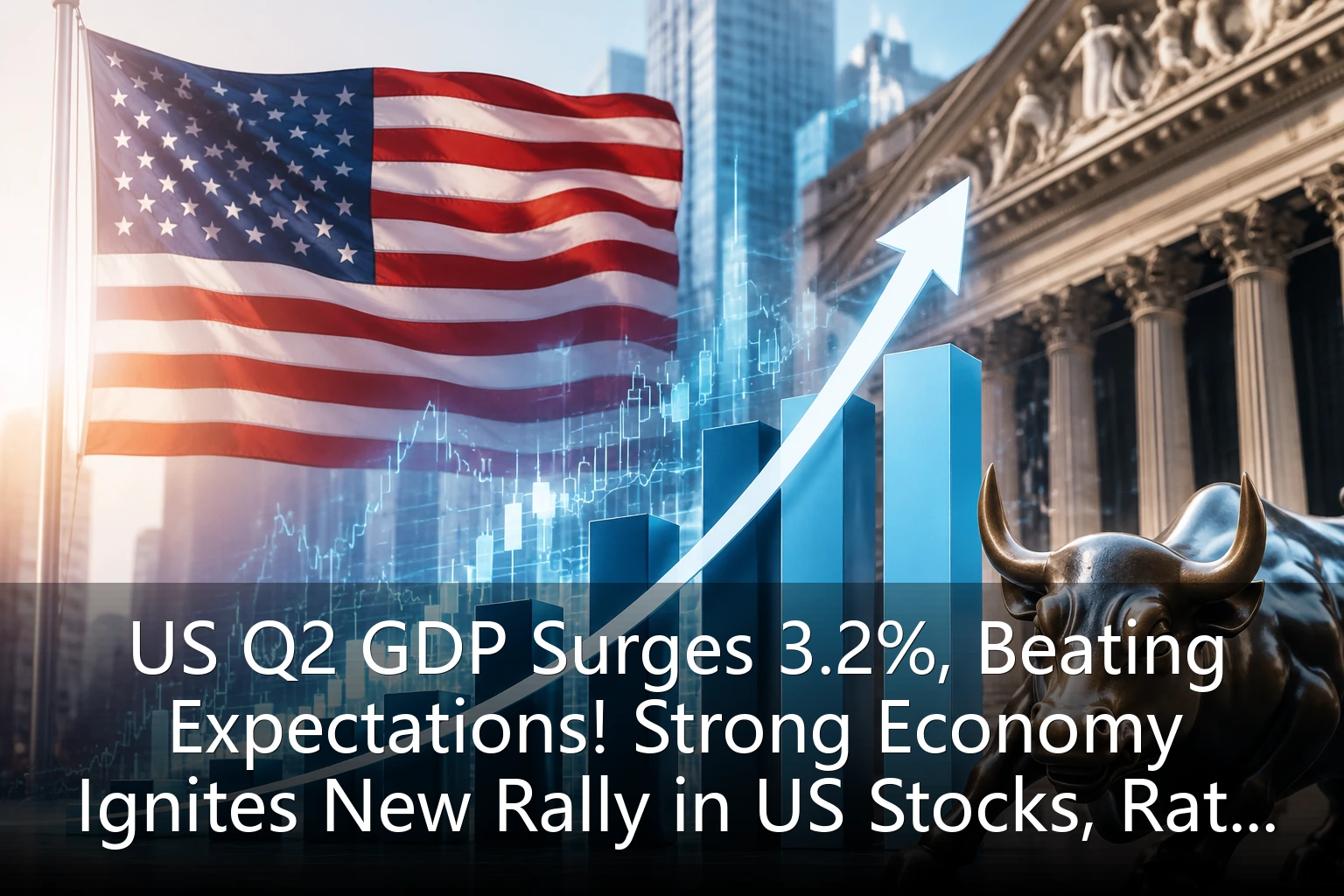
On July 28, 2026, the US Department of Commerce released the preliminary second-quarter Gross Domestic Product (GDP) reading, showing an annualized quarterly rate growth of 3.2%, not only above the market expectation of 2.8% but also significantly accelerating from 2.3% in the first quarter. After this data release, major US stock indexes oscillated then turned stronger, with the S&P 500 briefly approaching the 7800 mark, and the Nasdaq performing notably led by tech stocks. Although the strong economic data may make the Federal Reserve (Fed) more cautious on rate cuts, bullish sentiment among investors remains undiminished, as they reassess the possibility of a 'soft landing' or even a 'no landing'.
GDP Surprise: Consumption and Investment Dual Engines Fire
This GDP beat was primarily driven by robust contributions from Personal Consumption Expenditures (PCE) and Nonresidential Fixed Investment. Personal consumption expenditures in Q2 surged at an annualized rate of 4.1%, doubling from 2.0% in the prior quarter, showing US consumer resilience despite high interest rates. Nonresidential fixed investment grew 5.6%, with equipment investment soaring 8.4%, reflecting continued corporate spending on AI, data centers, and automation equipment. Additionally, inventory investment contributed 0.6 percentage points to GDP.
However, residential investment declined for the third consecutive quarter, falling 1.2% quarter-on-quarter, indicating high mortgage rates are weighing on the housing market. Government spending edged up 0.8%, with federal and state outlays remaining stable.
Impact on Fed Policy Path: Rate Cut Expectations Cool but Not Extinguished
Following the GDP release, interest rate futures market pricing for a September rate cut by the Fed dropped sharply from 68% to 45%, and the expected total rate cut for the year narrowed from 75 basis points to 50 basis points. However, the core PCE price index, which the Fed focuses on more, unexpectedly cooled in June, rising only 2.2% (year-over-year), nearing the 2% target. This puts the Fed in a dilemma: an overheating economy could delay rate cuts, but easing price pressures allow room for accommodation. The market interprets this as a 'Goldilocks' scenario — strong growth, contained inflation — which is actually positive for stocks.
Chicago Fed President Austan Goolsbee remarked after the data: 'The GDP figures show the economy's foundation is solid, but we still need to observe more inflation data to determine the policy path.' His comments were seen as neutral-to-dovish, suggesting the Fed is not in a rush to act but does not rule out rate cuts if necessary.
US Stock Sector Performance: Tech, Financials, Consumer Stocks Rise Together; Energy Dragged by Oil Prices
Tech Stocks: AI Capex Boosts, Earnings Season Aids
The Nasdaq rose 1.2%, led by tech giants Microsoft, Nvidia, and Google. Microsoft's latest earnings showed Azure cloud revenue growth of 33%, with AI services contributing 20% growth, lifting its stock to a record high. Nvidia, amid sustained explosive demand for AI chips, revised its Q2 revenue estimate up to $35 billion, with shares gaining another 2.3%. Semiconductor equipment stocks such as Applied Materials and KLA also strengthened as the GDP report boosted investor confidence.
Financial Stocks: Strong Economy Benefits Lending and Margins
Bank stocks performed well, with JPMorgan Chase and Bank of America rising over 1.5%. Strong GDP implies lower corporate default risk and potentially rising loan demand. Additionally, the 10-year Treasury yield briefly spiked to 4.35% after the GDP release, helping banks widen net interest margins. The KBW Nasdaq Regional Banking Index rose 1.8%, reflecting market confidence in the economic outlook.
Consumer Stocks: Discretionary Leads; Amazon, Tesla Hit Highs
Strong consumer spending directly boosted consumer discretionary stocks. Amazon rose 2.5%, with markets expecting its Prime Day sales to set another record. Tesla, driven by better-than-expected China delivery data, gained 3.1%, leading a rebound in the EV sector. Retail stocks like Walmart and Costco also edged higher, while consumer staples (e.g., Procter & Gamble, Coca-Cola) were more subdued as market funds favored growth.
Energy Stocks: Weak Oil Prices Curb Gains
International oil prices were pressured by concerns over slowing global demand, with WTI crude futures falling below $70, dragging the energy sector down 0.8% overall. ExxonMobil and Chevron both closed lower. However, some analysts believe if the economy remains strong, energy demand may recover, making current levels a buying opportunity.
Market Outlook: Bullish Structure Intact but Volatility May Increase
Following the GDP surprise, several brokerages raised their full-year US GDP growth estimates. Goldman Sachs upgraded its 2026 growth forecast from 2.1% to 2.4% and raised its year-end S&P 500 target to 8,000 points. However, the market should also watch three major risks:
- Inflation Stickiness: If the economy continues to overheat, core prices may rebound, forcing the Fed to resume rate hikes — the biggest black swan for stocks.
- Geopolitical Risks: The Middle East situation and the Russia-Ukraine conflict remain unresolved; any supply disruption in crude oil could push up costs.
- Earnings Season Variables: Upcoming earnings reports from heavyweight companies like Apple and Meta could trigger a pullback if results disappoint.
Overall, US stocks still have room to rise in the near term under the 'strong economy + moderating inflation' environment. Investors can focus on tech giants related to AI, cloud, and automation, as well as financial stocks benefiting from the interest rate environment. Defensive sectors like utilities and healthcare are relatively lagging, suggesting underweight. In bonds, short-term Treasury yields may rise as rate cut expectations cool, but long-term yields have limited upside due to lingering doubts about long-term growth.
In summary, the Q2 GDP data laid a solid foundation for the second half of the US stock market, but investors should stay nimble and closely track inflation and Fed signals to navigate any potential policy shifts.